Cookies
This website uses mandatory cookies to ensure website functionality. With your consent, additional statistical and social media cookies may be used on this site.
If you accept additional cookies, please select your choice:
How does Gregorian chant influence 20th and 21st century music? Come and sing Gregorian melodies and works directly inspired by Gregorian chant, and explore the connections between ancient chant and contemporary music, including music by Pärt, Duruflé, Ødegaard, and Kaumann.
Meanwhile, Hybrid Hymns explores an alternative historical scenario in which Western polyphony becomes part of Islamic musical practice. Ecclesiastical modes, Notre-Dame organum, and polyphonic models from the 13th to 15th centuries are used to arrange Turkish hymns and create new compositions. Discover this imagined sound world through Gregorian chant, medieval polyphony, and arrangements from the Hybrid Hymns project.
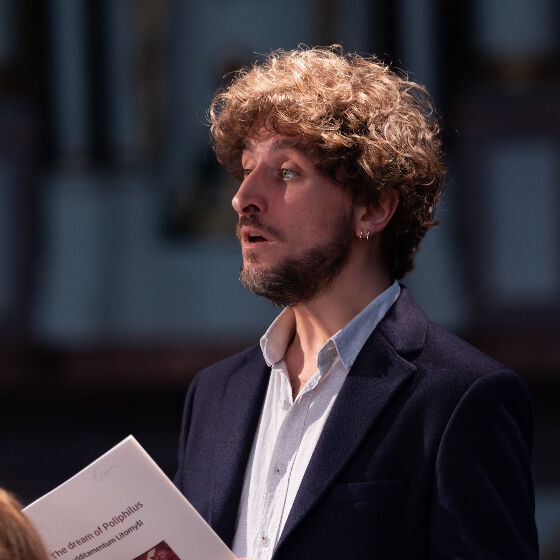
Ozan Karagöz is a Turkish singer, educator, and early music specialist focusing on Medieval and Renaissance repertoires. He studied violin, piano, and singing in Izmir, and composition, music theory, and harpsichord in Istanbul. Later, he studied at the Schola Cantorum Basiliensis, Switzerland, where he completed two master’s degrees: Early Music Theory under Johannes Menke and Felix Diergarten, and Medieval-Renaissance Singing under Kathleen Dineen, Dominique Vellard, and Crawford Young. After graduating, he taught at the same institution.
As a performer, Karagöz has worked with leading early music ensembles, including the Huelgas Ensemble, and has appeared in concerts, festivals, and recordings in Switzerland, Germany, France, Italy, Spain, Belgium and The Netherlands, as well as in Colombia and Taiwan. He is a founding member of the ensemble Rumorum (dir. Grace Newcombe) and is the director of the vocal ensemble Troxalida. Besides singing, his artistic work also includes Gothic harp and Renaissance dance.
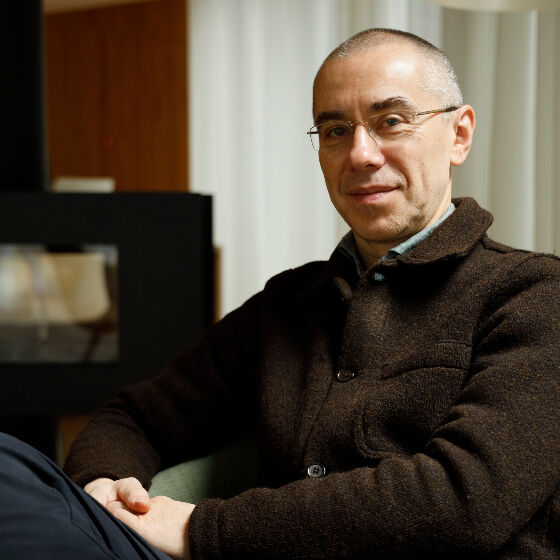
Jaan-Eik Tulve was born in Estonia. After obtaining his diploma in choral conducting at the Tallinn Conservatory in 1991, he studied Gregorian chant at Le Conservatoire National Supérieur de Musique et de Danse de Paris (CNSM), graduating in 1993. He then worked at the CNSM as assistant to Louis-Marie Vigne. He teaches courses in Gregorian chant worldwide. In 1996 he took up a post teaching Gregorian chant at the Estonian Academy of Music and Theatre. He is frequently invited to work in monasteries.
From 1992, Tulve served as conductor of the Paris Gregorian Choir for eight years, performing with them worldwide. In 1993, Tulve founded the Lac et Mel ensemble in Paris, as well as the female-voice section of the Paris Gregorian Choir in 1994. Finally, in 1996, he formed Tallinn’s award-winning Vox Clamantis ensemble. Tulve has conducted the Estonian Philharmonic Chamber Choir, Estonian National Male Choir, Helsinki Chamber Choir, and others.
Tulve has been awarded the Order of the White Star (Estonia), the Order of Léopold (Belgium), and the Order of Arts and Letters (France). He was chosen as the Musician of the Year 2017 by Estonian Public Broadcasting.
No limit
SATB
5 days
B - for good sight readers and singers who come prepared